Hum. It's been a while since I posted.
So far I'm liking this summer. Sun, warmth, some rain and cold. Everything in proportion. Lots of kisses and cuddles. He's got such a pretty head. I like it when he tucks it in my neck or armpit.
Kayyy. I'm still not particularly dreadful about travelling and presenting next week. If I truly start thinking about it, imagining what it's going to be like, planning what I'm going to say, how I'm going to introduce my topic - I still don't feel panicky! Weird.
Last summer I started fearing the upcoming presentation weeks in advance. I couldn't sleep properly for the last two weeks. It's so different now. I feel like I'm going to have a goofy smile on my face when I finally get there. Like, have fun almost.
My presentation is so much better this time around. I used colour for emphasis, and bold and italics and underlining and indentation. I put some fancy arrows on my tables and I even created a clumsy diagram. I'm so good.
I don't think I've mentioned it before, so this is where I'm going tomorrow:
http://www.liv.ac.uk/english/CL2009/
There's going to be a plenary lecture on Shakespeare, but I'm more interested in those about the lexis-grammar interface and the relationship between corpora and computing. It's going to be so good, a whole conference strictly in my field!
Of course, corpus linguistics is not a field of research, technically speaking. It's just a useful denominator, an umbrella term. There's no common methodology or theoretical framework. It simply indicates the source of research data. Perhaps a shared quantitative outlook.
Writing my presentation got me interested in research, again. There's simply nothing like it. I love the intellectual challenge and I just love linguistics. It's so beautiful.
Who knows, maybe I will write a dissertation after all one day. To definitively ruin my chances of employment outside the university. But first I'm going to stick to my latest plan of trying to find some real job somewhere else. If that doesn't work out well enough, I might go post-grad. Plan B if you will.
My parents, a certain teacher and a certain person with a pretty head would be thrilled about it. Everyone seems to be excited about the idea of an intelligent woman who would write the weirdest dissertation ever. Maybe I am just a little bit intelligent then? I enjoy being weird and crazy and goofy more, but intelligent isn't so bad.
Showing posts with label corpora. Show all posts
Showing posts with label corpora. Show all posts
Sunday, July 19, 2009
Friday, October 10, 2008
Oh, Canada!
I'm interested in Canada and Canadians. It's a little difficult to explain why exactly. I can't remember when I got first interested in them, or why.
I can tell you that I like their dry sense of self-irony. I like their nature. I like their literature. I like their music. But Canadians themselves find it difficult to define themselves. Usually it's by defining what they are not - at least not Americans. So maybe it isn't so surprising that I can't put my finger on why they fascinate me.
I can truly appreciate the fact that their government and everything about their country is so well documented. They have all these wonderful sources online, available free for anyone to use! There are archival materials on, pretty much anything you might be interested in.
The annoying thing is, they're usually in pdf files, as you might expect. A colleague of mine (I don't want to describe people I know in too much detail so I'll use such a grand term) complained in his dissertation that there is a worrying tendency of uploading texts online in pdf files, rather than transcribing them at all.
It's something only a corpus linguist would complain about, but I completely sympathize now. For anyone else but a corpus linguist, pdfs are usually good enough. But they're simply not viable for including in language corpora!
I got hold of this splendid corpus of present-day Canadian English. But since I'm going to have a diachronic dimension in my dissertation, it would make sense to have historical Canadian English as well. Sadly, there is only one such historical corpus in existence so far, and even that isn't available to anyone else but its creators.
Since the aforementioned colleague collected a corpus of hiw own for his dissertation project, and since I helped categorize and update it, I'm not too shy about the idea of compiling a corpus of my own.
But finding old Canadian English online in a reliable format is such a hopeless task. If you find something that has been transcribed, there's always the concern about whether it has been modernized or not. If a text is only available as a pdf file, it's pretty much of no use, unless I transcribe it myself.
I'm not really afraid of doing a lot work for my project. I wouldn't mind transcribing texts in principle. The problem is that I know that it would probably postpone the gathering of my actual research data too far in the future.
If I were to do so much work, I would have to take into account so many issues related to corpus compilation. There are numerous different views on how one should compile a corpus.
Some are willing to overlook any bias in the selection of the texts, in their length and text type, register, time of publication, anything that might affect the language of a text in relation to any other texts.
Others believe that especially a diachronic corpus should be carefully constructed so that the researcher doesn't have to worry about distortions in their data sets. Personally I think that such corpora may lull the researcher too much into believing that whatever the corpus throws up, it must be the final truth.
On the other hand, it isn't entirely straightforward to take into account everything by yourself, especially if you want to create quantitative illustrations of your data. It's particularly annoying when you're using many different corpora that were compiled according to completely different parameters, yet you'd like to compare them.
So I suppose there isn't much I can do except try my luck with getting my hands on that already existing historical corpus. Always worth a try.
Saturday, August 30, 2008
Auld lang syne, Mr. von Schlegel's turn of phrase!
I know it's been only three days since my last post, but I'll soon revert back to my one-post-per-week policy anyway. Take this as a warning that in the future it may not be worth the trouble checking back here more than twice a week, at the most. Unless you want to explore the archives and discover the less than glorious past of this blog. Actually you should, if you only like the paintings. There's much less of these boring ramblings of mine over last winter.
Down to business it is. As I mentioned in my previous post, in Munich I bought an old German translation of Shakespeare's King Henry IV Part 1 AND 2 (I noticed later that both were included). I was annoyed to find no mention of when the book was printed.
I could guess that it must be old, at least -ish, judging by the yellowish paper and the ribbon bookmark (those ribbons you only find in Bibles these days), let alone the very-old-and-Gothic-looking font of the German text. Strangely, the English text is in a more modern font.
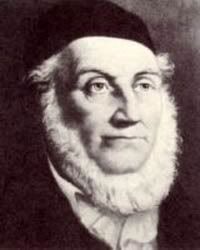
The translator, August Wilhelm von Schlegel (1767-1845), a poet himself, is still considered one of the best German translators of Shakespeare, according to Wikipedia. Someone else apparently thinks that Schlegel's translation is remarkably different from the original, for example as regards the verse style. Shakespeare often wrote in blank verse, which in his case means he wrote with an unrhymed iambic pentametre. This writer says that Schlegel transformed the blank verse into "the iambic pentametre with either male or female cadence", i.e. 10 or 11 syllables on each line.
Now I'm not very well-versed in these technicalities of poetic composition, but is the iambic pentametre with male or female cadence really so strikingly different from the regular one, which has ten syllables on a line? Anyone care to explain this to me? But be that as it may, I can appreciate the various problems Schlegel must have had, considering how different English and German are when it comes to word order and syllabic structure.
As for my problem of dating the volume. Schlegel's Shakespeare translations span the years 1797-1810. König Heinrich der Vierte was published in 1800. Obviously there have been reprints, through the 19th century until around the time of WWII. The later reprints, however, all seem to be collections including several plays. But I'm not sure whether that means that they were still printed as individual volumes or as a single book.
Down to business it is. As I mentioned in my previous post, in Munich I bought an old German translation of Shakespeare's King Henry IV Part 1 AND 2 (I noticed later that both were included). I was annoyed to find no mention of when the book was printed.
I could guess that it must be old, at least -ish, judging by the yellowish paper and the ribbon bookmark (those ribbons you only find in Bibles these days), let alone the very-old-and-Gothic-looking font of the German text. Strangely, the English text is in a more modern font.
The translator, August Wilhelm von Schlegel (1767-1845), a poet himself, is still considered one of the best German translators of Shakespeare, according to Wikipedia. Someone else apparently thinks that Schlegel's translation is remarkably different from the original, for example as regards the verse style. Shakespeare often wrote in blank verse, which in his case means he wrote with an unrhymed iambic pentametre. This writer says that Schlegel transformed the blank verse into "the iambic pentametre with either male or female cadence", i.e. 10 or 11 syllables on each line.
Now I'm not very well-versed in these technicalities of poetic composition, but is the iambic pentametre with male or female cadence really so strikingly different from the regular one, which has ten syllables on a line? Anyone care to explain this to me? But be that as it may, I can appreciate the various problems Schlegel must have had, considering how different English and German are when it comes to word order and syllabic structure.
(August Wilhelm von Schlegel)
As for my problem of dating the volume. Schlegel's Shakespeare translations span the years 1797-1810. König Heinrich der Vierte was published in 1800. Obviously there have been reprints, through the 19th century until around the time of WWII. The later reprints, however, all seem to be collections including several plays. But I'm not sure whether that means that they were still printed as individual volumes or as a single book.
Next I tried to find information on the publisher, Der Tempel Verlag. It was founded in 1909, so my book can't be more than almost a hundred years old – not much, eh? Apart from these tiny parsels of information, google really isn't almighty when it comes to finding bibliographical information. I don't mean just old books, but even more recent ones are surprisingly non-existent in the virtual world of search engines. Yet things, or even people, aren't supposed to be important if you can't google them. Fiddlesticks,* I say!
My final resort was the university library's online search engine(s). It's a real drag to go through all sorts of collections on god knows how many different portals, because for each search it takes so long to process. The end result still zilch. I'm slightly disheartened now with my less than resourceful detective skills.
Something good came out of all this though: I stumbled upon a website which has pictures and transcriptions of American diaries from late 19th to early 20th century: www.writtenbyhand.com. Perhaps not eligible for including in a corpus, but interesting nevertheless.
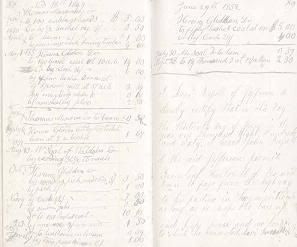
(Picture from Written by Hand Manuscript Americana)
Speaking of corpora, it occurred to me that there might be a possibility of compiling an Edward de Verean corpus for the purposes of comparing his language with Shakespeare's. I definitely need to look into it, since it would make for such an exhilarating research project. I know some websites with transcriptions of his personal letters, draft interrogatories (whatever those are) and memoranda, so all I need to do is find out if they're up for grabs or not.
I do know of one linguistic comparison between these authors, aided by a computer, using statistical methods: Was Oxford Shakespeare? A Computer-aided Analysis. Needless to say, these guys with all their knowledge of statistics still err somewhat in other methodological issues. They assume too much, take so much for granted, and any complexities that don't quite fit are pummeled flat. All in a day's work for anti- or pro-Shakespeareans alike!
*Another Shakespearean term, from no other than 1 Henry IV! Says Falstaff, "Heigh, heigh, the Deuill rides vpon a Fiddlesticke: what's the matter?" Of course, not quite in the same sense as in present-day use.
Subscribe to:
Posts (Atom)