When I applied to study English philology in university years back, I was young and stupid. I thought it would be just about linguistics. Little did I know that half of the studies are actually about literature. Heaven forbid that I should have taken a look at the syllabi on the university website.
A smarter person would have been able to guess so much from the entrance exam books. For Tampere, you had to read George Yule's Study of Language (which, fair enough, is about linguistics) and Montgomery et al's Ways of Reading (which is about basic theoretical issues in literary studies).

Yule's book was very well written, it makes learning about language very easy and even funny. It's a good introduction to the field of linguistics if you have absolutely no prior knowledge of it.
Montgomery and co's book wasn't that bad either, but it was completely misleading as to what literary studies are actually about at university level. (I couldn't even find a decent picture of it, evidence of just how unpopular it must be in general.)

For Turku, you had to read H.G. Widdowson's Linguistics, which was highly theoretical and challenging for a beginner, which fact I very much relished. There's nothing like the orgasmic feeling of expanding your mental horizons by reading something you can't quite understand, at least not immediately.

The University of Jyväskylä had The Bluest Eye by Toni Morrison and the aforementioned Ways of Reading as the required readings. I liked the novel, and it was actually a must-read later on in Tampere. Most importantly, when writing an essay about the book in the entrance exam I got to use one of my favourite words in English, soliloquy.
I love the sound of the word: you start with a weak syllable, which is then followed by a quick sequence of closed syllables, and at the end you glide away with a long [e]. The word didn't have much purpose in the essay, but that didn't diminish my feeling of triumph.

You might guess now why I chose to apply to these particular universities. I didn't even consider Helsinki, because I would have had to read a set of four completely different books. The strategy paid off, as I got accepted in all three universities.
So I've nothing against literature per se. I was a huge book buff when I was young, though what I read wasn't necessarily anything classic or prestigious. I enjoyed the act of reading, being completely immersed in another world and in somebody else's thoughts and feelings. It was escapism at its finest.
I liked a specific kind of fantasy. I liked for instance Sagan om Isfolket by Margit Sandemo, which is a 47-volume series telling the story of a family of witches from the 17th to the 20th century.
I'm not so fond of the kind with the elves, hobbits, wizards, dragons and whatnot. Somehow I could never buy into those Middle Earth-style worlds where people were stuck in the middle ages. I mean, why is it that they nearly always place fantasy stories in a medieval world?

The castles and swords and horses and armours and the clothes may look all fancy, but I find it hard to relate to characters who have to live in such a world. Because let's face it, who would seriously want to live like that? I'm reasonably happy in today's Finland where I don't need to know how to use a sword in order to protect myself against the dragons and those nasty little buggers called hobbits.
A fantasy freak might respond to this by saying that it's only fiction, don't take it so seriously. But that's exactly what you should and have to do when studying literature in university. It was a shocker to me to be honest.
While it doesn't necessarily take away from the reading experience to analyse the text closely, I do think it makes the experience dramatically different when compared to a child's way of reading.
As a kid, I used to devour several books a day during holidays, and at least one book a week throughout the year. I didn't stop to think about the symbolic meanings of anything in the books, or what the texts really mean aside from the story and the characters on the surface.

It took me a long time to get over my prejudices against literary analysis. The teachers had a role to play in my antipathy, as they seemed to think literature was the be-all and the end-all in the whole wide world (notice the not-so-clever Macbeth quote).
In my mind, literary criticism was equated with elitist assholism. When I didn't do so well with my first literature essay, the teacher flashed me a holier-than-thou smile and asked whether I was going to drop out of uni.
So just because I didn't have a clue after only one course, she thought there was no point in going on. As though literature was the only thing that mattered. My grades weren't that good in linguistics, either, but I knew I would learn eventually because I actually liked it.

So where does our gentle Shakespeare figure in this story of doom and gloom? Well, he made me fall in love with reading again. I totally didn't expect the plays to have such an impact on me. I'd seen some televised versions, but I never saw anything special in them.
I suppose I was really taken by the story of the tragic figure of Macbeth. Seeing a film of the play where he was a very fine young man didn't hurt, either. (I'm a sucker for men with a short beard, and a cute ringmail hood.)

But truth be told, I have always had a predilection for tragic characters. Call them baddies if you will.
I always find baddies the most interesting characters. In a way, they're the most human of all humans. In real life, everyone likes goody-goodies, to be sure. But stories about thoroughly good and benevolent people make really bad ones. I don't think you can fully relate to someone who is supposedly a perfect human being.
I know some people who don't seem to realize this. They don't see fault in themselves. I've seen them behave in less than moral ways many times, yet they fail to question themselves even afterwards.
How can you grow as a person if you don't see what you're doing wrong? If you never question your own motives and never acknowledge your imperfections, how can you truly accept anyone else's?
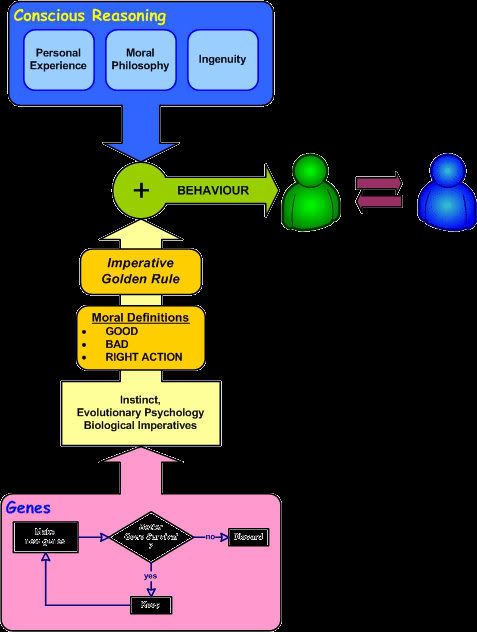
(Click to enlarge)
If anything, I think people who don't realize their own occasional immoral or otherwise unbecoming behaviour are actually more dangerous than those who do. Once you notice that you're not as kind and tolerant as you thought you were, you can consciously start trying to become more so.
But if you always see things only your way, your ways and opinions being ultimately superior to those of others, well... what can I say, I feel sorry for those people. With their delusional self image, they're probably intolerant of different views and opinions, different choices in life.
And isn't Macbeth's story about someone who is very human in his lowly desires, ambitions and " evil" thoughts, who can yet understand the evil quality of his thoughts and actions?
Of course we judge people by their behaviour rather than by their thoughts, so one shouldn't tolerate Macbeth's actions. But when someone says they don't feel a thing for a tragic figure like Macbeth, I'm astonished.
(Pictures 3,4,6,7,8,9,10: http://www.routledge.com; http://www.oup.com; http://images.amazon.com; http://upload.wikimedia.org; http://www.mallorywrites.com; http://www.bardolatry.com; http://lh6.ggpht.com)