Hum. It's been a while since I posted.
So far I'm liking this summer. Sun, warmth, some rain and cold. Everything in proportion. Lots of kisses and cuddles. He's got such a pretty head. I like it when he tucks it in my neck or armpit.
Kayyy. I'm still not particularly dreadful about travelling and presenting next week. If I truly start thinking about it, imagining what it's going to be like, planning what I'm going to say, how I'm going to introduce my topic - I still don't feel panicky! Weird.
Last summer I started fearing the upcoming presentation weeks in advance. I couldn't sleep properly for the last two weeks. It's so different now. I feel like I'm going to have a goofy smile on my face when I finally get there. Like, have fun almost.
My presentation is so much better this time around. I used colour for emphasis, and bold and italics and underlining and indentation. I put some fancy arrows on my tables and I even created a clumsy diagram. I'm so good.
I don't think I've mentioned it before, so this is where I'm going tomorrow:
http://www.liv.ac.uk/english/CL2009/
There's going to be a plenary lecture on Shakespeare, but I'm more interested in those about the lexis-grammar interface and the relationship between corpora and computing. It's going to be so good, a whole conference strictly in my field!
Of course, corpus linguistics is not a field of research, technically speaking. It's just a useful denominator, an umbrella term. There's no common methodology or theoretical framework. It simply indicates the source of research data. Perhaps a shared quantitative outlook.
Writing my presentation got me interested in research, again. There's simply nothing like it. I love the intellectual challenge and I just love linguistics. It's so beautiful.
Who knows, maybe I will write a dissertation after all one day. To definitively ruin my chances of employment outside the university. But first I'm going to stick to my latest plan of trying to find some real job somewhere else. If that doesn't work out well enough, I might go post-grad. Plan B if you will.
My parents, a certain teacher and a certain person with a pretty head would be thrilled about it. Everyone seems to be excited about the idea of an intelligent woman who would write the weirdest dissertation ever. Maybe I am just a little bit intelligent then? I enjoy being weird and crazy and goofy more, but intelligent isn't so bad.
Showing posts with label shakespeare. Show all posts
Showing posts with label shakespeare. Show all posts
Sunday, July 19, 2009
Monday, September 29, 2008
Falstaff's nose and the babble of green fields
Othello by Mikko Viherjuuri was not quite what I expected. It reminded me of why I don't go see plays much.
I don't get the overacting, especially when it isn't done all the way through. At times I was reminded of my favourite soapie, Days of Our Lives. If I want to see overacting, I'll watch that show. And they do it better yet!
The director explains in the programme that he had to translate the play into plain, unlyrical Finnish, because the play is notoriously "mythical" (tarunomainen) and wouldn't make much sense for most people. I don't understand his choice of term there, though I understand what he's saying.
But still, he left some key parts in the play "mythical", so as not to dampen their dramatic effect. I'm not sure what I think about those scenes. They went as over the top as Days of Our Lives, which I love to no end, so I suppose in principle I liked those parts. I guess my problem with it is simply the inconsistency.
The director also claims that de-mythifying the play has made Othello's character more believable. Not in my opinion. I couldn't understand how gullible he was. He was probably pathologically jealous and possessive is all I can think of.
I suspect it also made it harder to understand the characters because the director removed most of the monologues. That's how Shakespeare I suppose showed to the viewer how the characters' logic and thinking worked. Leave them out and you have far less to work from.
What's great though is that it made me realize how soap operas are actually keeping alive 400 years old dramatic traditions! So why are they looked down upon so much? Why won't so many people admit to watching them?
If you really think about it, it's not like they don't have depth of meaning to them. Just think about how everything happens in circles in soapies. The basic pattern is that people hook up, they fall out, they hook up again, sometimes with the same people and sometimes not.
Sometimes they die, and sometimes they come back alive. And again and again. It all reminds me of Samuel Beckett's play Waiting for Godot. In the play, two characters wait in the same nondescript place everyday for someone called Godot, but he never arrives.
They try to entertain themselves, but their days are pretty much the same. The play really has no ending or beginning because we start from the middle of their waiting, and stop before Godot has arrived. They'll stay in their circular existence for Godot knows how long.
Just like Vladimir and Estragon are doomed to do the same thing over and over, soapie characters are doomed to their lives of neverending drama and love triangles, quadrangles, whatever. I think Shakespeare would have approved, so why don't you.
I don't get the overacting, especially when it isn't done all the way through. At times I was reminded of my favourite soapie, Days of Our Lives. If I want to see overacting, I'll watch that show. And they do it better yet!
The director explains in the programme that he had to translate the play into plain, unlyrical Finnish, because the play is notoriously "mythical" (tarunomainen) and wouldn't make much sense for most people. I don't understand his choice of term there, though I understand what he's saying.
But still, he left some key parts in the play "mythical", so as not to dampen their dramatic effect. I'm not sure what I think about those scenes. They went as over the top as Days of Our Lives, which I love to no end, so I suppose in principle I liked those parts. I guess my problem with it is simply the inconsistency.
The director also claims that de-mythifying the play has made Othello's character more believable. Not in my opinion. I couldn't understand how gullible he was. He was probably pathologically jealous and possessive is all I can think of.
I suspect it also made it harder to understand the characters because the director removed most of the monologues. That's how Shakespeare I suppose showed to the viewer how the characters' logic and thinking worked. Leave them out and you have far less to work from.
What's great though is that it made me realize how soap operas are actually keeping alive 400 years old dramatic traditions! So why are they looked down upon so much? Why won't so many people admit to watching them?
If you really think about it, it's not like they don't have depth of meaning to them. Just think about how everything happens in circles in soapies. The basic pattern is that people hook up, they fall out, they hook up again, sometimes with the same people and sometimes not.
Sometimes they die, and sometimes they come back alive. And again and again. It all reminds me of Samuel Beckett's play Waiting for Godot. In the play, two characters wait in the same nondescript place everyday for someone called Godot, but he never arrives.
They try to entertain themselves, but their days are pretty much the same. The play really has no ending or beginning because we start from the middle of their waiting, and stop before Godot has arrived. They'll stay in their circular existence for Godot knows how long.
Just like Vladimir and Estragon are doomed to do the same thing over and over, soapie characters are doomed to their lives of neverending drama and love triangles, quadrangles, whatever. I think Shakespeare would have approved, so why don't you.
Saturday, September 20, 2008
How noble in reason, infinite in faculties; Or, what a good Shakespeare heretic makes*
No worries ‒ the earlier post today was just a hoax. This is what I've been planning to post for a while now. The upside about having to wait a week to post anything is that I'll have something in my secret reserves for the whole coming year, if things go as planned. They never do, which is exactly why plans are needed, as a partial remedy.
Even though I may not be reaching my target readership with these kind of posts, I'm going to keep up with this silly Shakespeare-related babble. I find everything about this literary icon endlessly amusing, ever since I learned about the authorship question. Oh, it's almost too juicy sometimes.
Of course, many will be bored to death with this. I realize that my posts look rather long, but why is it that text is somehow less accessible in large amounts on a computer screen, on a website (sorry, blog)? I might shrink the font size in the future, to make my rantings look nice and concise.
But it's my blog, my power, my kingdom and my horse that I'll kiddy up any way I wish to go. In the name of myself, this blog and the holy ghost of Shakespeare, whoever s/he was. Amen.
So the other day it occurred to me to search for videos related to the Shakespeare Authorship question (wholly deserving of the capital letters right) on Youtube. Nothing too original came up, except for this fine piece of someone playing Edward de Vere.
There's also the taping of the mock trial in Washington. The audience will apparently laugh at anything. Some people just listen and wait for anything to laugh at, so as not to give an impression of having no sense of humour. Silly if you ask me.
Then I ran into John Hudson's theory of Emilia Lanier as Shakespeare. Or rather, his "discovery". Finally a candidate I'd love to believe in. What if Shakespeare was a woman? Wouldn't that be so cool?
Seriously speaking, I still know too little of the issue to vouch for any certain candidate. I'm still not sure I have to. The agnostic camp may not be a whole lot of fun, but at least I know I don't have any ulterior motives behind every statement I might make.

Earlier this week I read a book pertaining to methods in historical study. There were many points that struck a chord in me, thinking back to writing research papers of any kind. There was something about being able to relate to the people in the past, in order to draw the right conclusions about anything they did, to do justice to them when writing about them.
When I was writing on the authorship question, this aspect puzzled me. Who exactly should I try to relate to? Shakespeare, whoever s/he was, and his/her contemporaries, or the authorship question enthusiasts? If the latter, it looks like I failed miserably. It put me off how so many of these researchers were trumpeting their respective candidate without seeming to have much of self-criticism. Once they had made up their mind about their choice of candidate, they turned on the defensive and overly assertive gear.
Now that I think about it, the strong rhetoric is probably partly due to the publicity that the question has received. In addition to multitudes of books by professionals and amateurs (here meaning simply someone without a scholarly background), there are also websites galore that can be accessed by anyone, anywhere, any time. In public, you obviously have to make your statement without hesitation if you want to get it through to people. They'll have none of this hedging that is so natural and even imperative in the scientific way of writing.
Another interesting point in the book was something about certainty with your research results. It reminded me of what was said in a book on the history of childhood. Something along the lines that childhood historians often wake up in cold sweat in the dark of the night when realizing how thin a line separates their work from fiction.

I wonder if there isn't something of this kind of hysteria present in the rhetoric of the authorship scholars and researchers. If you're going to spend years on studying an author's work, you don't want to be held in an eternal state of suspense as to who it is you're studying, even if it doesn't always matter in literary analysis.
It could also be the case that these brits and americans simply write differently from what I'm used to reading. It's strange, though, since I rarely read anything in any other language than English. You'd think I was used to it by now. It must be related to the genre of writing, i.e. books aimed at a popular audience, as well as internet websites.
So don't be fooled by Hudson's less than convincing case on that video. Calling the Stratford Shakespeare "Shaksper" would make anyone sound a little cuckoo. His website is more impressive (takes a while to load, be warned).
Besides, "there are just too many coincidences here"! Wow, I was instantly won over by that particular statement! She was a known feminist, a Jew, used De Pisan as a source as did Shakespeare and ‒ gasp ‒ was mistress to Henry Carey, who was the patron of the acting company Lord Chamberlain's Men, which performed Shakespeare's plays among others. It boggles the mind!
As sugar at the bottom, she even included the names of important people in her life in the plays, in the form of clever puns. To show to the posterity that it was her who wrote them. It can't get any more obvious than that.
It's the cumulative argument all over again. A large number of coincidences sharing one common denominator must by laws of nature entail truthfulness of the original premise! It's like horoscopes: the parameters are so loosely defined that they'll fit any person to a tempting degree.

Even though I may not be reaching my target readership with these kind of posts, I'm going to keep up with this silly Shakespeare-related babble. I find everything about this literary icon endlessly amusing, ever since I learned about the authorship question. Oh, it's almost too juicy sometimes.
Of course, many will be bored to death with this. I realize that my posts look rather long, but why is it that text is somehow less accessible in large amounts on a computer screen, on a website (sorry, blog)? I might shrink the font size in the future, to make my rantings look nice and concise.
But it's my blog, my power, my kingdom and my horse that I'll kiddy up any way I wish to go. In the name of myself, this blog and the holy ghost of Shakespeare, whoever s/he was. Amen.
So the other day it occurred to me to search for videos related to the Shakespeare Authorship question (wholly deserving of the capital letters right) on Youtube. Nothing too original came up, except for this fine piece of someone playing Edward de Vere.
There's also the taping of the mock trial in Washington. The audience will apparently laugh at anything. Some people just listen and wait for anything to laugh at, so as not to give an impression of having no sense of humour. Silly if you ask me.
Then I ran into John Hudson's theory of Emilia Lanier as Shakespeare. Or rather, his "discovery". Finally a candidate I'd love to believe in. What if Shakespeare was a woman? Wouldn't that be so cool?
Seriously speaking, I still know too little of the issue to vouch for any certain candidate. I'm still not sure I have to. The agnostic camp may not be a whole lot of fun, but at least I know I don't have any ulterior motives behind every statement I might make.
("Edward de Vere" from aforementioned Youtube video)
Earlier this week I read a book pertaining to methods in historical study. There were many points that struck a chord in me, thinking back to writing research papers of any kind. There was something about being able to relate to the people in the past, in order to draw the right conclusions about anything they did, to do justice to them when writing about them.
When I was writing on the authorship question, this aspect puzzled me. Who exactly should I try to relate to? Shakespeare, whoever s/he was, and his/her contemporaries, or the authorship question enthusiasts? If the latter, it looks like I failed miserably. It put me off how so many of these researchers were trumpeting their respective candidate without seeming to have much of self-criticism. Once they had made up their mind about their choice of candidate, they turned on the defensive and overly assertive gear.
Now that I think about it, the strong rhetoric is probably partly due to the publicity that the question has received. In addition to multitudes of books by professionals and amateurs (here meaning simply someone without a scholarly background), there are also websites galore that can be accessed by anyone, anywhere, any time. In public, you obviously have to make your statement without hesitation if you want to get it through to people. They'll have none of this hedging that is so natural and even imperative in the scientific way of writing.
Another interesting point in the book was something about certainty with your research results. It reminded me of what was said in a book on the history of childhood. Something along the lines that childhood historians often wake up in cold sweat in the dark of the night when realizing how thin a line separates their work from fiction.
(What came up with "hysteria + rhetoric" on Google Image search)
I wonder if there isn't something of this kind of hysteria present in the rhetoric of the authorship scholars and researchers. If you're going to spend years on studying an author's work, you don't want to be held in an eternal state of suspense as to who it is you're studying, even if it doesn't always matter in literary analysis.
It could also be the case that these brits and americans simply write differently from what I'm used to reading. It's strange, though, since I rarely read anything in any other language than English. You'd think I was used to it by now. It must be related to the genre of writing, i.e. books aimed at a popular audience, as well as internet websites.
So don't be fooled by Hudson's less than convincing case on that video. Calling the Stratford Shakespeare "Shaksper" would make anyone sound a little cuckoo. His website is more impressive (takes a while to load, be warned).
Besides, "there are just too many coincidences here"! Wow, I was instantly won over by that particular statement! She was a known feminist, a Jew, used De Pisan as a source as did Shakespeare and ‒ gasp ‒ was mistress to Henry Carey, who was the patron of the acting company Lord Chamberlain's Men, which performed Shakespeare's plays among others. It boggles the mind!
As sugar at the bottom, she even included the names of important people in her life in the plays, in the form of clever puns. To show to the posterity that it was her who wrote them. It can't get any more obvious than that.
It's the cumulative argument all over again. A large number of coincidences sharing one common denominator must by laws of nature entail truthfulness of the original premise! It's like horoscopes: the parameters are so loosely defined that they'll fit any person to a tempting degree.
(Was Emilia Lanier Shakespeare - the most brilliant hermafroditic literary genius in the world?)
Emilia Lanier was not a complete stranger to me. Earlier, she's been identified as the "Dark Lady" of the sonnets. For instance, Michael Wood (2003, In Search of Shakespeare) reckoned that Shakespeare might have had an affair with this woman when living in London, away from his wife and children in Stratford.
Maybe she's the one who gave Shakespeare syphilis (again proposed by mr. Wood), so as a result the 40-something Shakespeare described himself as old and decrepit in the sonnets. Wouldn't that explain everything so neatly? In your face, Oxfordian heretics!
Hudson connects Lanier with Shakespeare because of her background in music, among other things. Her family performed in court. And what d'you know: Shakespeare's plays are "the most musical" in England! Witness "nearly 2000 musical references" and "300 different musical terms" - clearly proof that Shakespeare the author must have been a professional musician, or connected to such people.
Obviously I don't dare to argue on this with Hudson, who holds a certificate in a Shakespeare Institute, who reviews for a Shakespeare journal, and who is writing a thesis on a Shakespeare play. He must know the plays far better than I ever could.
Yet I can't help wondering, how come is it that I keep bumping into these fabulous figures and almost incredible assessments of the nature and vocabulary of Shakespeare's plays. It all makes the (wo)man sound completely inhuman in his boundless abilities and knowledge of everything there is to know in the world.
Taking a wild guess, if I had a look at the list of the references and terms, I would probably find perhaps 50 quotes of the word "music", or some musical instrument. Surely, if you refer to music and musical instruments a lot, it means you must be musically talented. Right?
Music, lute, piano, violin, string, chord, note, minor, major, melody. What if I added a string of musical terms at the end of each of my posts? Or better, sprinkled them here and there to spice up my language? If some day some future historian for some reason created a corpus of my posts and started searching for musical terms, they could conclude that I was a very musical person. There could simply be no other explanation.
*Ever wonder why 19th century novels nearly always seem to have subtitles starting with "or, [yada yada yada]"? I have. Did the authors have trouble making up their minds about the title, or were they just trying to be as informative as possible?
(The first picture shamelessly ripped from the Youtube video; the second picture from John Hudson's website.)
Saturday, August 30, 2008
Auld lang syne, Mr. von Schlegel's turn of phrase!
I know it's been only three days since my last post, but I'll soon revert back to my one-post-per-week policy anyway. Take this as a warning that in the future it may not be worth the trouble checking back here more than twice a week, at the most. Unless you want to explore the archives and discover the less than glorious past of this blog. Actually you should, if you only like the paintings. There's much less of these boring ramblings of mine over last winter.
Down to business it is. As I mentioned in my previous post, in Munich I bought an old German translation of Shakespeare's King Henry IV Part 1 AND 2 (I noticed later that both were included). I was annoyed to find no mention of when the book was printed.
I could guess that it must be old, at least -ish, judging by the yellowish paper and the ribbon bookmark (those ribbons you only find in Bibles these days), let alone the very-old-and-Gothic-looking font of the German text. Strangely, the English text is in a more modern font.
The translator, August Wilhelm von Schlegel (1767-1845), a poet himself, is still considered one of the best German translators of Shakespeare, according to Wikipedia. Someone else apparently thinks that Schlegel's translation is remarkably different from the original, for example as regards the verse style. Shakespeare often wrote in blank verse, which in his case means he wrote with an unrhymed iambic pentametre. This writer says that Schlegel transformed the blank verse into "the iambic pentametre with either male or female cadence", i.e. 10 or 11 syllables on each line.
Now I'm not very well-versed in these technicalities of poetic composition, but is the iambic pentametre with male or female cadence really so strikingly different from the regular one, which has ten syllables on a line? Anyone care to explain this to me? But be that as it may, I can appreciate the various problems Schlegel must have had, considering how different English and German are when it comes to word order and syllabic structure.

As for my problem of dating the volume. Schlegel's Shakespeare translations span the years 1797-1810. König Heinrich der Vierte was published in 1800. Obviously there have been reprints, through the 19th century until around the time of WWII. The later reprints, however, all seem to be collections including several plays. But I'm not sure whether that means that they were still printed as individual volumes or as a single book.
Down to business it is. As I mentioned in my previous post, in Munich I bought an old German translation of Shakespeare's King Henry IV Part 1 AND 2 (I noticed later that both were included). I was annoyed to find no mention of when the book was printed.
I could guess that it must be old, at least -ish, judging by the yellowish paper and the ribbon bookmark (those ribbons you only find in Bibles these days), let alone the very-old-and-Gothic-looking font of the German text. Strangely, the English text is in a more modern font.
The translator, August Wilhelm von Schlegel (1767-1845), a poet himself, is still considered one of the best German translators of Shakespeare, according to Wikipedia. Someone else apparently thinks that Schlegel's translation is remarkably different from the original, for example as regards the verse style. Shakespeare often wrote in blank verse, which in his case means he wrote with an unrhymed iambic pentametre. This writer says that Schlegel transformed the blank verse into "the iambic pentametre with either male or female cadence", i.e. 10 or 11 syllables on each line.
Now I'm not very well-versed in these technicalities of poetic composition, but is the iambic pentametre with male or female cadence really so strikingly different from the regular one, which has ten syllables on a line? Anyone care to explain this to me? But be that as it may, I can appreciate the various problems Schlegel must have had, considering how different English and German are when it comes to word order and syllabic structure.
(August Wilhelm von Schlegel)
As for my problem of dating the volume. Schlegel's Shakespeare translations span the years 1797-1810. König Heinrich der Vierte was published in 1800. Obviously there have been reprints, through the 19th century until around the time of WWII. The later reprints, however, all seem to be collections including several plays. But I'm not sure whether that means that they were still printed as individual volumes or as a single book.
Next I tried to find information on the publisher, Der Tempel Verlag. It was founded in 1909, so my book can't be more than almost a hundred years old – not much, eh? Apart from these tiny parsels of information, google really isn't almighty when it comes to finding bibliographical information. I don't mean just old books, but even more recent ones are surprisingly non-existent in the virtual world of search engines. Yet things, or even people, aren't supposed to be important if you can't google them. Fiddlesticks,* I say!
My final resort was the university library's online search engine(s). It's a real drag to go through all sorts of collections on god knows how many different portals, because for each search it takes so long to process. The end result still zilch. I'm slightly disheartened now with my less than resourceful detective skills.
Something good came out of all this though: I stumbled upon a website which has pictures and transcriptions of American diaries from late 19th to early 20th century: www.writtenbyhand.com. Perhaps not eligible for including in a corpus, but interesting nevertheless.

(Picture from Written by Hand Manuscript Americana)
Speaking of corpora, it occurred to me that there might be a possibility of compiling an Edward de Verean corpus for the purposes of comparing his language with Shakespeare's. I definitely need to look into it, since it would make for such an exhilarating research project. I know some websites with transcriptions of his personal letters, draft interrogatories (whatever those are) and memoranda, so all I need to do is find out if they're up for grabs or not.
I do know of one linguistic comparison between these authors, aided by a computer, using statistical methods: Was Oxford Shakespeare? A Computer-aided Analysis. Needless to say, these guys with all their knowledge of statistics still err somewhat in other methodological issues. They assume too much, take so much for granted, and any complexities that don't quite fit are pummeled flat. All in a day's work for anti- or pro-Shakespeareans alike!
*Another Shakespearean term, from no other than 1 Henry IV! Says Falstaff, "Heigh, heigh, the Deuill rides vpon a Fiddlesticke: what's the matter?" Of course, not quite in the same sense as in present-day use.
Wednesday, August 27, 2008
Hawt and bothered, with every fibre of my being
I'm finally experiencing my definition of a true summer: +30 and sunshine all day long! I wish I'd known earlier that all I had to do was come to Germany. I wouldn't mind at all having a summer house here. Perhaps if I married someone rich. A rich German to be more precise.
I'd love to stay the whole week, to see what the workshops are like, but unfortunately I didn't expect to enjoy myself this much here. I like this a lot better than my usual visits to foreign countries, which almost always are package holidays.
It's nice to combine business and pleasure, or rather, educating the mind as well as your soul. What I don't like about package holidays is that the schedules for excursions are so rigid and you have to wake up very early. Here I am actually fully awake and appreciative of everything because I'm not sleep deprived.
It was a complete surprise to me to see so many BIG names on the programme. I had no idea ICEHL was one of the very few and precious conferences on English historical linguistics, or even historical linguistics in general! Someone said to me that it was very ballsy of me to come here and give my very first presentation in such a prominent conference, without having even started on my dissertation yet. It's funny because I didn't think of it like that at all. I was just trying my luck without knowing anything about this event beforehand. I'm glad I did.
What's also funny is that this nice man came to talk to me the first day, probably because I looked a little lost, and we had a nice chat. His name sounded familiar. Yesterday he gave a plenary talk, and it turns out he's the chief etymologist of the Oxford English Dictionary! The lecture was useful in the sense that suddenly I realized, seeing this actual person discussing his work, how there are real people behind dictionaries. In the end it's their personal opinions and analyses that are often taken at face value.
I bought King Henry the IV Part 1 in English with a German translation. Only 5€ (it's ancient), and I thought I could start learning German by reading one of my favourites. Just for the laugh, really.
I'd love to stay the whole week, to see what the workshops are like, but unfortunately I didn't expect to enjoy myself this much here. I like this a lot better than my usual visits to foreign countries, which almost always are package holidays.
It's nice to combine business and pleasure, or rather, educating the mind as well as your soul. What I don't like about package holidays is that the schedules for excursions are so rigid and you have to wake up very early. Here I am actually fully awake and appreciative of everything because I'm not sleep deprived.
It was a complete surprise to me to see so many BIG names on the programme. I had no idea ICEHL was one of the very few and precious conferences on English historical linguistics, or even historical linguistics in general! Someone said to me that it was very ballsy of me to come here and give my very first presentation in such a prominent conference, without having even started on my dissertation yet. It's funny because I didn't think of it like that at all. I was just trying my luck without knowing anything about this event beforehand. I'm glad I did.
What's also funny is that this nice man came to talk to me the first day, probably because I looked a little lost, and we had a nice chat. His name sounded familiar. Yesterday he gave a plenary talk, and it turns out he's the chief etymologist of the Oxford English Dictionary! The lecture was useful in the sense that suddenly I realized, seeing this actual person discussing his work, how there are real people behind dictionaries. In the end it's their personal opinions and analyses that are often taken at face value.
I bought King Henry the IV Part 1 in English with a German translation. Only 5€ (it's ancient), and I thought I could start learning German by reading one of my favourites. Just for the laugh, really.
Friday, August 1, 2008
Enough of it already
I've been thinking about something a certain nice Serbian girl asked me at the Helsinki conference.
She asked what linguistics mailing lists I'm on.
Erm, listS?!
I'm only subscribing Linguist List so far and I already feel bogged down by all the mail that I get.
It's mostly redundant. I find myself clicking delete delete delete oh that sounds interesting delete delete deletism to my heart's content* and then even more deletage!
It's annoying too, all these calls for papers to conferences I probably won't be able to visit. I need to figure out my financing before I start running all around the world. I need to dig too much out of my own pocket for the upcoming trip, even with my professor's kind assistance with getting a grant. Thankfully I know how to live hand to mouth.
Besides, the travelling aspect makes me uneasy. I hate it. Please someone develop a teleport right now!
In any case, I think I could aim for ICAME 29 next year. I found about it too late to send a paper this year. Of course they'll accept my draft next time, it's a given. Based on my hefty experience with conferences, they'll take anything they can get. (Hint: sarcasm in the air.)
By the way, ICAME 28 in 2007 took place in Stratford-upon-Avon! That would've been wonderful. The home town of the lowly actor who dared (or durst, since we're talking about ancient people here) to claim the works of the mighty Shakespeare as his own. Some nerve, huh!
Anyhow. I started looking for more interesting mailing lists. There's one about corpora that should be useful. Lately I've been thinking a lot about all these methodological issues related to them and it's very unnerving.
There seems to be no rhyme nor reason** to any of it among more experienced linguists, so I'm not too worried about it. You can always make up some ad hoc arguments for your choice of corpora if it comes to that. If your ethics so allow. But I don't mean to sound disillusioned or anything.
One list focuses on medieval texts. I'd like to find one specified in historical linguistics, but not that historical. Early modern English is as far as I'm willing to go.
* Originally used in Henry VI and The Merchant of Venice.
** As you like it.
She asked what linguistics mailing lists I'm on.
Erm, listS?!
I'm only subscribing Linguist List so far and I already feel bogged down by all the mail that I get.
It's mostly redundant. I find myself clicking delete delete delete oh that sounds interesting delete delete deletism to my heart's content* and then even more deletage!
It's annoying too, all these calls for papers to conferences I probably won't be able to visit. I need to figure out my financing before I start running all around the world. I need to dig too much out of my own pocket for the upcoming trip, even with my professor's kind assistance with getting a grant. Thankfully I know how to live hand to mouth.
Besides, the travelling aspect makes me uneasy. I hate it. Please someone develop a teleport right now!
In any case, I think I could aim for ICAME 29 next year. I found about it too late to send a paper this year. Of course they'll accept my draft next time, it's a given. Based on my hefty experience with conferences, they'll take anything they can get. (Hint: sarcasm in the air.)
By the way, ICAME 28 in 2007 took place in Stratford-upon-Avon! That would've been wonderful. The home town of the lowly actor who dared (or durst, since we're talking about ancient people here) to claim the works of the mighty Shakespeare as his own. Some nerve, huh!
Anyhow. I started looking for more interesting mailing lists. There's one about corpora that should be useful. Lately I've been thinking a lot about all these methodological issues related to them and it's very unnerving.
There seems to be no rhyme nor reason** to any of it among more experienced linguists, so I'm not too worried about it. You can always make up some ad hoc arguments for your choice of corpora if it comes to that. If your ethics so allow. But I don't mean to sound disillusioned or anything.
One list focuses on medieval texts. I'd like to find one specified in historical linguistics, but not that historical. Early modern English is as far as I'm willing to go.
* Originally used in Henry VI and The Merchant of Venice.
** As you like it.
Wednesday, July 30, 2008
My bookshelf to me a kingdom is
Since I have a crappy camera in my cell phone, I thought I could take pictures of all of the books that I own, to be used as decoration when I discuss each of them in turn. Bar any embarrassing ones, but there are very few of those anyway.
So let this be an introduction into a series of posts where I bring to the public eye the contents of my bookshelf (and the floor next to my desk, where I keep my favourite ones). Because what could be more interesting than seeing tiny pictures of books in bad quality and reading about my take on them? Absolutely nothing, you guessed right.
But before I get down to business, I must bring to every reader's attention an interesting point that I found out about only recently.
The title for this post was derived from the poem My mind to me a kindgom is, published in 1588, traditionally attributed to Sir Edward Dyer (1543(?)-1607). I always try to come up with titles that have some pretentious, quasi-artistic literary allusions in them.
Dyer was a contemporary of Shakespeare's, a courtier poet whom inter alia George Puttenham praised in his Arte of English Poesie (1589), an account of notable English writers at the time. Which by the way I absolutely had to have on my laptop at home in its original spelling, so I can read it over and over so my heart with pleasure fills.

Wordsworth is quite alright you know. And I like linking every other word to a Wikipedia article. Wikipedia is a good source for trivia that you don't want to memorize, especially if it doesn't matter whether the information is in the end accurate or not.
Now here comes the funny part. More recently (in 1975 in The Review of English Studies Vol. 26, to be accurate), the poem has been attributed by Stephen W. May to the 17th Earl of Oxford, Edward de Vere (1550-1604).

Before that, Alden Brooks had proposed in his 1943 book Will Shakspere and the Dyer's hand that the above-mentioned sir Edward Dyer was the true William Shakespeare. In other words, Brooks claimed that Dyer wrote the works of Shakespeare, not the man who went by that name at the time.
You may wonder what's so funny about that, because surely it makes sense that authorship questions often arise with several hundred years old texts? Well, in this case the question is of considerably more interest than in general.
I wrote a paper on the Shakespeare authorship question, and one of my sources was a dissertation by one Dr. Roger Stritmatter. He is a proponent of the Oxfordian theory which claims that it was Edward de Vere, the Earl of Oxford, who wrote the works that are generally attributed to a man called William Shakespeare.
Dr. Stritmatter had included in his appendices the aforementioned poem, with the intention of demonstrating how similar Edward de Vere's and Shakespeare's writing styles were.

At the time of writing the paper, I didn't realize that the poem wasn't even originally attributed to de Vere!
I was aware that the traditional author of the poem, Sir Dyer, was an alternative Shakespeare candidate himself. But I never realized just how eager the so-called Oxfordians were in appropriating all the works in English literature to Edward de Vere.
Even without knowing about this, there were several problems with the analysis of the poem, and I simply dismissed it as one more of Dr. Stritmatter's farfetched, uninterrelated and badly argued points. In all fairness, though, he was relying on Stephen May's analysis.
As if there weren't enough reasons to doubt anything that Shakespeare authorship heretics write, I was confronted by yet another. The more I learn about the issue, the more ridiculous it becomes in my eyes.
I wish it didn't have to be like that, as in the beginning I was very sympathetic to their cause. But the fact that I like to call it a cause is itself telling. It aggravates me how political the issue is and has always been. Many people probably see no evil in mixing scientific research and politics, but personally I find it disturbing. I'm too much of an idealist, and politics really isn't for idealistic people.
So what I'm trying to say is, stay tuned for more discussion on the Shakespeare authorship question. I've got files and folders full of goodies related to the issue, just waiting to be ridiculed.

I'm not going to make fun of anything on purpose even when it's begging for it, since I'm fighting teeth and nails against becoming partial to any particular candidate.
I don't think I mind it either way, whether it was the earl de Vere or Shakespeare from Stratford, or anybody else for that matter, who wrote those famous plays and sonnets. No reason to mix 'n' match the author and the works, right?
So let this be an introduction into a series of posts where I bring to the public eye the contents of my bookshelf (and the floor next to my desk, where I keep my favourite ones). Because what could be more interesting than seeing tiny pictures of books in bad quality and reading about my take on them? Absolutely nothing, you guessed right.
But before I get down to business, I must bring to every reader's attention an interesting point that I found out about only recently.
The title for this post was derived from the poem My mind to me a kindgom is, published in 1588, traditionally attributed to Sir Edward Dyer (1543(?)-1607). I always try to come up with titles that have some pretentious, quasi-artistic literary allusions in them.
Dyer was a contemporary of Shakespeare's, a courtier poet whom inter alia George Puttenham praised in his Arte of English Poesie (1589), an account of notable English writers at the time. Which by the way I absolutely had to have on my laptop at home in its original spelling, so I can read it over and over so my heart with pleasure fills.
Wordsworth is quite alright you know. And I like linking every other word to a Wikipedia article. Wikipedia is a good source for trivia that you don't want to memorize, especially if it doesn't matter whether the information is in the end accurate or not.
Now here comes the funny part. More recently (in 1975 in The Review of English Studies Vol. 26, to be accurate), the poem has been attributed by Stephen W. May to the 17th Earl of Oxford, Edward de Vere (1550-1604).
(Young Edward de Vere)
Before that, Alden Brooks had proposed in his 1943 book Will Shakspere and the Dyer's hand that the above-mentioned sir Edward Dyer was the true William Shakespeare. In other words, Brooks claimed that Dyer wrote the works of Shakespeare, not the man who went by that name at the time.
You may wonder what's so funny about that, because surely it makes sense that authorship questions often arise with several hundred years old texts? Well, in this case the question is of considerably more interest than in general.
I wrote a paper on the Shakespeare authorship question, and one of my sources was a dissertation by one Dr. Roger Stritmatter. He is a proponent of the Oxfordian theory which claims that it was Edward de Vere, the Earl of Oxford, who wrote the works that are generally attributed to a man called William Shakespeare.
Dr. Stritmatter had included in his appendices the aforementioned poem, with the intention of demonstrating how similar Edward de Vere's and Shakespeare's writing styles were.
(On the cover of the dissertation is a photo of Edward de Vere's Geneva bible!)
At the time of writing the paper, I didn't realize that the poem wasn't even originally attributed to de Vere!
I was aware that the traditional author of the poem, Sir Dyer, was an alternative Shakespeare candidate himself. But I never realized just how eager the so-called Oxfordians were in appropriating all the works in English literature to Edward de Vere.
Even without knowing about this, there were several problems with the analysis of the poem, and I simply dismissed it as one more of Dr. Stritmatter's farfetched, uninterrelated and badly argued points. In all fairness, though, he was relying on Stephen May's analysis.
As if there weren't enough reasons to doubt anything that Shakespeare authorship heretics write, I was confronted by yet another. The more I learn about the issue, the more ridiculous it becomes in my eyes.
I wish it didn't have to be like that, as in the beginning I was very sympathetic to their cause. But the fact that I like to call it a cause is itself telling. It aggravates me how political the issue is and has always been. Many people probably see no evil in mixing scientific research and politics, but personally I find it disturbing. I'm too much of an idealist, and politics really isn't for idealistic people.
So what I'm trying to say is, stay tuned for more discussion on the Shakespeare authorship question. I've got files and folders full of goodies related to the issue, just waiting to be ridiculed.
(My "souvenir" from Edinburgh. It has served me well.)
I'm not going to make fun of anything on purpose even when it's begging for it, since I'm fighting teeth and nails against becoming partial to any particular candidate.
I don't think I mind it either way, whether it was the earl de Vere or Shakespeare from Stratford, or anybody else for that matter, who wrote those famous plays and sonnets. No reason to mix 'n' match the author and the works, right?
Monday, July 21, 2008
A Million dead poets would gladly attest - or would they?
In my view, the Shakespeare Authorship question is a tangled web that would probably take a lifetime to unravel in its entirety.
I was rather disheartened when I tried to find accounts of the matter which actually would have tried to remain objective. I'm still on a hunt for an author who's genuinely trying to find the truth, rather than trying to defend his or her respective candidate as the true Shakespeare.
But maybe I'm looking at it the wrong way. Maybe you're not supposed to be objective. Maybe the only reason why anyone would be interested in the matter is that they actually care about who the author is.
Be that as it may, personally I still believe that you don't have to have a "favourite" candidate in order to be interested in the question. All this "bitter trench warfare", as it's been called, is entertaining and amusing in its own right.
I admit that my notion of "entertaining and amusing" may differ from the more generic meaning of those words. For instance, I couldn't resist a chuckle when I read the description of the Oxfordian Richard Whalen's 1994 book, Shakespeare - Who was he?. (There's an imaginative title for a book if I ever saw one.)
Let me quote whoever wrote the description:
To elucidate the terminology for everyone: Oxfordians believe that Edward de Vere (1550-1604), the 17th Earl of Oxford, wrote Shakespeare. Their candidate is usually called Oxford, though the man himself preferred to sign his letters as Oxenford. At least we know he had a sense of humour, or it's just another manifestation of the flexibility of Elizabethan spelling. Which is also one issue I must touch upon in the future.
So Hamlet, "the most autobiographical" of Shakespeare's plays. The "direct" parallels between the play and the earl's life are used as an argument on his behalf, because – here comes the gist of it – the play is the most autobiographical of them all.
Of course, whether a work is autobiographical or not can only be determined if you know who the author is. Please, please correct me if I'm wrong on this one! If I'm not, I've just found another ridiculous circular argument from the Oxfordian camp. (Not that the "orthodox" Shakespearians haven't excelled in that area for their part.)
To drive home the point of this post: even with a quick 5-minute search on the authorship question, you're bound to run into irrational, silly or just plain stupid arguments.
In countering the inevitably ensuing frustration from all that, my weapon is to make light of it. But even my sense of humour has its limits.
I was going to present a rough draft of all the issues that I'm going to cover in my forthcoming series on the authorship question. Turns out that instead, I was once again amused slash annoyed by an Oxfordian statement, and consequently thrown off course. This is going to be an interesting journey, I can tell.
I was rather disheartened when I tried to find accounts of the matter which actually would have tried to remain objective. I'm still on a hunt for an author who's genuinely trying to find the truth, rather than trying to defend his or her respective candidate as the true Shakespeare.
But maybe I'm looking at it the wrong way. Maybe you're not supposed to be objective. Maybe the only reason why anyone would be interested in the matter is that they actually care about who the author is.
Be that as it may, personally I still believe that you don't have to have a "favourite" candidate in order to be interested in the question. All this "bitter trench warfare", as it's been called, is entertaining and amusing in its own right.
I admit that my notion of "entertaining and amusing" may differ from the more generic meaning of those words. For instance, I couldn't resist a chuckle when I read the description of the Oxfordian Richard Whalen's 1994 book, Shakespeare - Who was he?. (There's an imaginative title for a book if I ever saw one.)
Let me quote whoever wrote the description:
Most intriguing are the many direct parallels between Oxford's life and Shakespeare's works, especially in Hamlet, the most autobiographical of the plays.
To elucidate the terminology for everyone: Oxfordians believe that Edward de Vere (1550-1604), the 17th Earl of Oxford, wrote Shakespeare. Their candidate is usually called Oxford, though the man himself preferred to sign his letters as Oxenford. At least we know he had a sense of humour, or it's just another manifestation of the flexibility of Elizabethan spelling. Which is also one issue I must touch upon in the future.
So Hamlet, "the most autobiographical" of Shakespeare's plays. The "direct" parallels between the play and the earl's life are used as an argument on his behalf, because – here comes the gist of it – the play is the most autobiographical of them all.
Of course, whether a work is autobiographical or not can only be determined if you know who the author is. Please, please correct me if I'm wrong on this one! If I'm not, I've just found another ridiculous circular argument from the Oxfordian camp. (Not that the "orthodox" Shakespearians haven't excelled in that area for their part.)
To drive home the point of this post: even with a quick 5-minute search on the authorship question, you're bound to run into irrational, silly or just plain stupid arguments.
In countering the inevitably ensuing frustration from all that, my weapon is to make light of it. But even my sense of humour has its limits.
I was going to present a rough draft of all the issues that I'm going to cover in my forthcoming series on the authorship question. Turns out that instead, I was once again amused slash annoyed by an Oxfordian statement, and consequently thrown off course. This is going to be an interesting journey, I can tell.
Tuesday, June 10, 2008
Banquo by your bedside
Macbeth is probably my favourite by Shakespeare. I also quite like the volume that I own of the play, with the sketchy portrait in bright colours. The font size is big and there are lots of footnotes, so it has a good, hefty feel, even though it's the shortest play he wrote, if I remember correctly.

When I applied to study English philology in university years back, I was young and stupid. I thought it would be just about linguistics. Little did I know that half of the studies are actually about literature. Heaven forbid that I should have taken a look at the syllabi on the university website.
A smarter person would have been able to guess so much from the entrance exam books. For Tampere, you had to read George Yule's Study of Language (which, fair enough, is about linguistics) and Montgomery et al's Ways of Reading (which is about basic theoretical issues in literary studies).

Yule's book was very well written, it makes learning about language very easy and even funny. It's a good introduction to the field of linguistics if you have absolutely no prior knowledge of it.
Montgomery and co's book wasn't that bad either, but it was completely misleading as to what literary studies are actually about at university level. (I couldn't even find a decent picture of it, evidence of just how unpopular it must be in general.)

For Turku, you had to read H.G. Widdowson's Linguistics, which was highly theoretical and challenging for a beginner, which fact I very much relished. There's nothing like the orgasmic feeling of expanding your mental horizons by reading something you can't quite understand, at least not immediately.

The University of Jyväskylä had The Bluest Eye by Toni Morrison and the aforementioned Ways of Reading as the required readings. I liked the novel, and it was actually a must-read later on in Tampere. Most importantly, when writing an essay about the book in the entrance exam I got to use one of my favourite words in English, soliloquy.
I love the sound of the word: you start with a weak syllable, which is then followed by a quick sequence of closed syllables, and at the end you glide away with a long [e]. The word didn't have much purpose in the essay, but that didn't diminish my feeling of triumph.

You might guess now why I chose to apply to these particular universities. I didn't even consider Helsinki, because I would have had to read a set of four completely different books. The strategy paid off, as I got accepted in all three universities.
So I've nothing against literature per se. I was a huge book buff when I was young, though what I read wasn't necessarily anything classic or prestigious. I enjoyed the act of reading, being completely immersed in another world and in somebody else's thoughts and feelings. It was escapism at its finest.
I liked a specific kind of fantasy. I liked for instance Sagan om Isfolket by Margit Sandemo, which is a 47-volume series telling the story of a family of witches from the 17th to the 20th century.
I'm not so fond of the kind with the elves, hobbits, wizards, dragons and whatnot. Somehow I could never buy into those Middle Earth-style worlds where people were stuck in the middle ages. I mean, why is it that they nearly always place fantasy stories in a medieval world?

The castles and swords and horses and armours and the clothes may look all fancy, but I find it hard to relate to characters who have to live in such a world. Because let's face it, who would seriously want to live like that? I'm reasonably happy in today's Finland where I don't need to know how to use a sword in order to protect myself against the dragons and those nasty little buggers called hobbits.
A fantasy freak might respond to this by saying that it's only fiction, don't take it so seriously. But that's exactly what you should and have to do when studying literature in university. It was a shocker to me to be honest.
While it doesn't necessarily take away from the reading experience to analyse the text closely, I do think it makes the experience dramatically different when compared to a child's way of reading.
As a kid, I used to devour several books a day during holidays, and at least one book a week throughout the year. I didn't stop to think about the symbolic meanings of anything in the books, or what the texts really mean aside from the story and the characters on the surface.

It took me a long time to get over my prejudices against literary analysis. The teachers had a role to play in my antipathy, as they seemed to think literature was the be-all and the end-all in the whole wide world (notice the not-so-clever Macbeth quote).
In my mind, literary criticism was equated with elitist assholism. When I didn't do so well with my first literature essay, the teacher flashed me a holier-than-thou smile and asked whether I was going to drop out of uni.
So just because I didn't have a clue after only one course, she thought there was no point in going on. As though literature was the only thing that mattered. My grades weren't that good in linguistics, either, but I knew I would learn eventually because I actually liked it.

So where does our gentle Shakespeare figure in this story of doom and gloom? Well, he made me fall in love with reading again. I totally didn't expect the plays to have such an impact on me. I'd seen some televised versions, but I never saw anything special in them.
I suppose I was really taken by the story of the tragic figure of Macbeth. Seeing a film of the play where he was a very fine young man didn't hurt, either. (I'm a sucker for men with a short beard, and a cute ringmail hood.)

But truth be told, I have always had a predilection for tragic characters. Call them baddies if you will.
I always find baddies the most interesting characters. In a way, they're the most human of all humans. In real life, everyone likes goody-goodies, to be sure. But stories about thoroughly good and benevolent people make really bad ones. I don't think you can fully relate to someone who is supposedly a perfect human being.
I know some people who don't seem to realize this. They don't see fault in themselves. I've seen them behave in less than moral ways many times, yet they fail to question themselves even afterwards.
How can you grow as a person if you don't see what you're doing wrong? If you never question your own motives and never acknowledge your imperfections, how can you truly accept anyone else's?

If anything, I think people who don't realize their own occasional immoral or otherwise unbecoming behaviour are actually more dangerous than those who do. Once you notice that you're not as kind and tolerant as you thought you were, you can consciously start trying to become more so.
But if you always see things only your way, your ways and opinions being ultimately superior to those of others, well... what can I say, I feel sorry for those people. With their delusional self image, they're probably intolerant of different views and opinions, different choices in life.
And isn't Macbeth's story about someone who is very human in his lowly desires, ambitions and " evil" thoughts, who can yet understand the evil quality of his thoughts and actions?
Of course we judge people by their behaviour rather than by their thoughts, so one shouldn't tolerate Macbeth's actions. But when someone says they don't feel a thing for a tragic figure like Macbeth, I'm astonished.
(Pictures 3,4,6,7,8,9,10: http://www.routledge.com; http://www.oup.com; http://images.amazon.com; http://upload.wikimedia.org; http://www.mallorywrites.com; http://www.bardolatry.com; http://lh6.ggpht.com)
When I applied to study English philology in university years back, I was young and stupid. I thought it would be just about linguistics. Little did I know that half of the studies are actually about literature. Heaven forbid that I should have taken a look at the syllabi on the university website.
A smarter person would have been able to guess so much from the entrance exam books. For Tampere, you had to read George Yule's Study of Language (which, fair enough, is about linguistics) and Montgomery et al's Ways of Reading (which is about basic theoretical issues in literary studies).
Yule's book was very well written, it makes learning about language very easy and even funny. It's a good introduction to the field of linguistics if you have absolutely no prior knowledge of it.
Montgomery and co's book wasn't that bad either, but it was completely misleading as to what literary studies are actually about at university level. (I couldn't even find a decent picture of it, evidence of just how unpopular it must be in general.)
For Turku, you had to read H.G. Widdowson's Linguistics, which was highly theoretical and challenging for a beginner, which fact I very much relished. There's nothing like the orgasmic feeling of expanding your mental horizons by reading something you can't quite understand, at least not immediately.
The University of Jyväskylä had The Bluest Eye by Toni Morrison and the aforementioned Ways of Reading as the required readings. I liked the novel, and it was actually a must-read later on in Tampere. Most importantly, when writing an essay about the book in the entrance exam I got to use one of my favourite words in English, soliloquy.
I love the sound of the word: you start with a weak syllable, which is then followed by a quick sequence of closed syllables, and at the end you glide away with a long [e]. The word didn't have much purpose in the essay, but that didn't diminish my feeling of triumph.
You might guess now why I chose to apply to these particular universities. I didn't even consider Helsinki, because I would have had to read a set of four completely different books. The strategy paid off, as I got accepted in all three universities.
So I've nothing against literature per se. I was a huge book buff when I was young, though what I read wasn't necessarily anything classic or prestigious. I enjoyed the act of reading, being completely immersed in another world and in somebody else's thoughts and feelings. It was escapism at its finest.
I liked a specific kind of fantasy. I liked for instance Sagan om Isfolket by Margit Sandemo, which is a 47-volume series telling the story of a family of witches from the 17th to the 20th century.
I'm not so fond of the kind with the elves, hobbits, wizards, dragons and whatnot. Somehow I could never buy into those Middle Earth-style worlds where people were stuck in the middle ages. I mean, why is it that they nearly always place fantasy stories in a medieval world?
The castles and swords and horses and armours and the clothes may look all fancy, but I find it hard to relate to characters who have to live in such a world. Because let's face it, who would seriously want to live like that? I'm reasonably happy in today's Finland where I don't need to know how to use a sword in order to protect myself against the dragons and those nasty little buggers called hobbits.
A fantasy freak might respond to this by saying that it's only fiction, don't take it so seriously. But that's exactly what you should and have to do when studying literature in university. It was a shocker to me to be honest.
While it doesn't necessarily take away from the reading experience to analyse the text closely, I do think it makes the experience dramatically different when compared to a child's way of reading.
As a kid, I used to devour several books a day during holidays, and at least one book a week throughout the year. I didn't stop to think about the symbolic meanings of anything in the books, or what the texts really mean aside from the story and the characters on the surface.
It took me a long time to get over my prejudices against literary analysis. The teachers had a role to play in my antipathy, as they seemed to think literature was the be-all and the end-all in the whole wide world (notice the not-so-clever Macbeth quote).
In my mind, literary criticism was equated with elitist assholism. When I didn't do so well with my first literature essay, the teacher flashed me a holier-than-thou smile and asked whether I was going to drop out of uni.
So just because I didn't have a clue after only one course, she thought there was no point in going on. As though literature was the only thing that mattered. My grades weren't that good in linguistics, either, but I knew I would learn eventually because I actually liked it.
So where does our gentle Shakespeare figure in this story of doom and gloom? Well, he made me fall in love with reading again. I totally didn't expect the plays to have such an impact on me. I'd seen some televised versions, but I never saw anything special in them.
I suppose I was really taken by the story of the tragic figure of Macbeth. Seeing a film of the play where he was a very fine young man didn't hurt, either. (I'm a sucker for men with a short beard, and a cute ringmail hood.)
But truth be told, I have always had a predilection for tragic characters. Call them baddies if you will.
I always find baddies the most interesting characters. In a way, they're the most human of all humans. In real life, everyone likes goody-goodies, to be sure. But stories about thoroughly good and benevolent people make really bad ones. I don't think you can fully relate to someone who is supposedly a perfect human being.
I know some people who don't seem to realize this. They don't see fault in themselves. I've seen them behave in less than moral ways many times, yet they fail to question themselves even afterwards.
How can you grow as a person if you don't see what you're doing wrong? If you never question your own motives and never acknowledge your imperfections, how can you truly accept anyone else's?
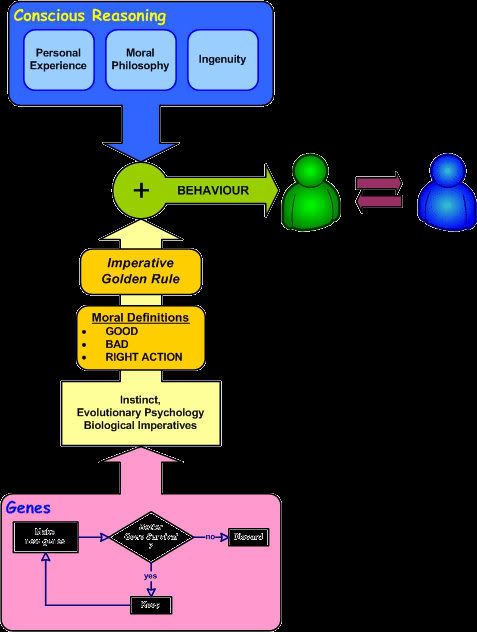
(Click to enlarge)
If anything, I think people who don't realize their own occasional immoral or otherwise unbecoming behaviour are actually more dangerous than those who do. Once you notice that you're not as kind and tolerant as you thought you were, you can consciously start trying to become more so.
But if you always see things only your way, your ways and opinions being ultimately superior to those of others, well... what can I say, I feel sorry for those people. With their delusional self image, they're probably intolerant of different views and opinions, different choices in life.
And isn't Macbeth's story about someone who is very human in his lowly desires, ambitions and " evil" thoughts, who can yet understand the evil quality of his thoughts and actions?
Of course we judge people by their behaviour rather than by their thoughts, so one shouldn't tolerate Macbeth's actions. But when someone says they don't feel a thing for a tragic figure like Macbeth, I'm astonished.
(Pictures 3,4,6,7,8,9,10: http://www.routledge.com; http://www.oup.com; http://images.amazon.com; http://upload.wikimedia.org; http://www.mallorywrites.com; http://www.bardolatry.com; http://lh6.ggpht.com)
Subscribe to:
Posts (Atom)
